Hey there, future flooring champion. I see you. You’ve taken the plunge and bought those sleek boxes of vinyl plank flooring. They’re sitting in the middle of your room, whispering promises of a beautiful, new, DIY-transformed space. And you’ve watched the videos—it looks like a giant, satisfying puzzle. Click, lock, bam! Done.
Well, I’m here to tell you it is totally doable. But I’m also here to give you the real, down-and-dirty tips that the slick video tutorials might gloss over. Because between "click" and "lock" there's a whole world of "oh, crap" moments just waiting to happen. I’ve made these mistakes myself so you don't have to.
Think of this as your friendly, slightly worn-out guide to avoiding the classic facepalm moments. Let's get into the nitty-gritty.
The "Oops" List: Biggest Vinyl Plank Blunders
 1) Rushing the "Getting to Know You" Phase (Aka, Acclimation)
Look, I get it. You’re excited. You want to tear those boxes open and get started. Fight that urge.
What goes wrong? Your flooring has been living in a warehouse or a truck. Your house has its own vibe—its own humidity and temperature. If you don’t let the planks chill out and get used to your place first, they can pull some sneaky moves later. They might expand and buckle like a speed bump, or shrink and leave weird gaps. It’s a heartbreaker.
How to not mess this up:
- Just be patient. For, like, two whole days.
- Leave the boxes sealed and lay them flat on the floor in the exact room they’ll be installed in.
- Make sure your house is at a normal living temperature (think comfy t-shirt weather, not sauna or icebox).
2) Being Lazy About What's Underneath (The Subfloor)
This is the big one. The one almost everyone tries to cut corners on. Your subfloor is the foundation. If it’s a mess, your beautiful new floor will be a mess. It’s that simple.
What goes wrong? Every single little bump, every piece of grit, every dip in the floor will eventually show through. You’ll feel soft, squishy spots. You’ll hear annoying crunching sounds when you walk. It’ll feel cheap, and the locks can even fail.
How to not mess this up:
- Clean like a maniac. Then vacuum. Then, I’m not kidding, get on your hands and knees and wipe the floor with a damp cloth. It needs to be clean.
- Check for flatness.Grab the longest, straightest thing you have—a level, a long board, a straightedge. Lay it on the floor. If you see big gaps or it rocks back and forth, you’ve got work to do. You’re aiming for no more than a 1/8-inch gap over 6 feet.
- Fix it.For concrete, pour a self-leveler (it’s less scary than it sounds). For wood, sand down the high bits and fill the low bits with a patching compound. It’s a boring, unglamorous job, but it’s the secret to a pro-looking finish.
3) Hugging the Walls Too Tight (The Expansion Gap)
“It’s vinyl, it doesn’t expand much!” Sure, but it does a little. And when it does, it needs somewhere to go.
What goes wrong? If you install the planks tight against the walls, they have nowhere to expand. So they push against each other and the only way to go is UP. You’ll end up with a buckled, lumpy floor that looks like a topographic map.
How to not mess this up:
- Go to the hardware store and buy a bag of plastic spacers. They cost almost nothing.
- As you go between the planks and the wall stick them on all sides. A 1/4-inch gap is the magic number.
- Forget not to include gaps around pipes, door frames, and that kitchen island. This gap will be covered later by the baseboards and quarter-round molding and nobody will ever know. It’s your safety-net little secret.
4) Creating the Lame "Ladder" Pattern
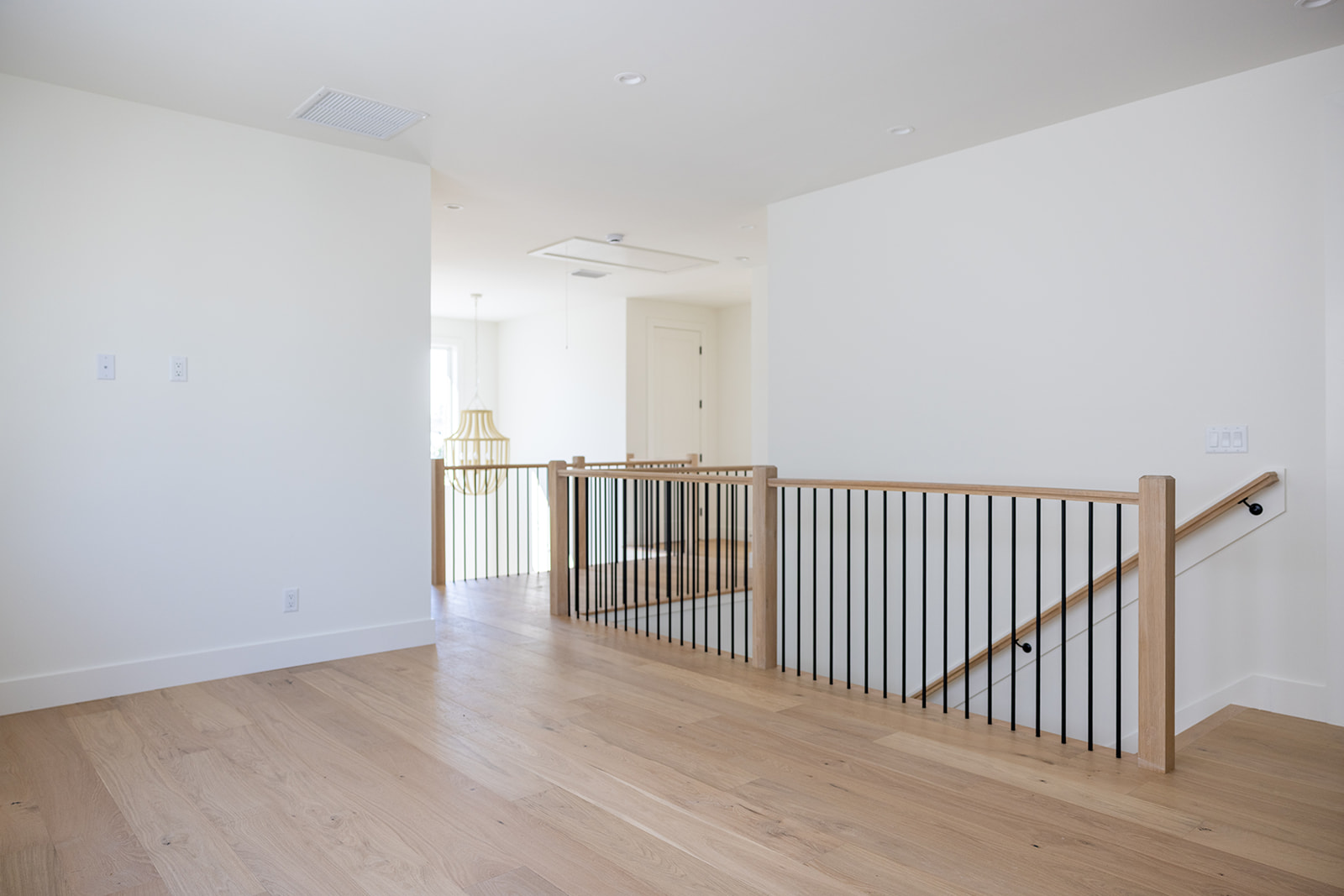 It is so simple when you are ready to make a new row, just take the piece with which you have cut the last row. However, when you do it on each instance, you form an unusually noticeable and rather unattractive pattern with the seams matching up with each other row. This we refer to as stair-stepping or an H-pattern.
What goes wrong? To begin with it appears unnatural and monotonous. That is the first thing your eye catches and it shouts DIY NEWBIE. Second, it leaves an area of weakness that is located at the junction of all the seams in the floor that is likely to rip off.
How to not mess this up:
- Mix it up!You want a random, natural look.
- A good rule is to make sure the seams between planks are at least 6 inches apart from the seams in the rows next to them. Some flooring boxes even tell you the minimum (often 8 inches).
- Sometimes you can use the cut-off piece to start the next row. Other times, you’ll need to cut a new, full-length plank to a random size to keep the pattern irregular. It takes a tiny bit more brainpower, but it makes a huge difference.
5) Getting Hammer-Happy and Forcing It
That click-lock system is clever, but it’s also a little delicate. If you’re just whacking the planks with a hammer, you’re going to have a bad time.
What goes wrong? You’ll smash the delicate tongues and grooves right off. A damaged plank won’t lock properly, which leads to seams that pop open, edges that lift, and a floor that feels insecure.
How to not mess this up:
- Use a Tapping Block.This is a simple piece of plastic. You place it against the edge of the plank and tap the block with your mallet, not the plank itself.
- Connect the long side first.For most brands, you angle the new plank into the long side of the previous row until it clicks in. Then you lower it and tap the end joint closed. Don’t try to do both at once.
- Get a Pull Bar.For the last row against the wall, this tool is a lifesaver. It lets you pull and lock those final planks into place without damaging them.
The Quick Cheat Sheet
DO...
- ...let the flooring get comfy in your house for 48 hours.
- ...become a subfloor psycho, making it cleaner and flatter than you ever thought necessary.
- ...use those little spacer widgets to keep a gap from the walls.
- ...make your seam pattern look random, like fallen dominoes.
- ...use a tapping block and pull bar—they’re your best buddies.
DON'T...
- ...rip open the boxes and go for it on day one.
- ...assume you can just install over that one little bump or bit of dirt.
- ...let the flooring touch anywall or fixed object.
- ...create a boring, repeating ladder pattern with the seams.
- ...smack the planks directly with a hammer. Ever.
Questions You're Probably Asking
Q: Can I just put this right over my old vinyl floor?
A: Maybe! If the old floor is totally smooth, stuck down tight, and isn't one of those squishy cushioned ones, you're probably good. But always, always check the paperwork that came with your specific planks.
Q: Wait, do I need a plastic sheet underneath? A vapor barrier?
A: If you're putting it on a concrete slab in a basement, almost definitely yes. That concrete sweats moisture and you don't want it sneaking up into your floor. For a wood subfloor upstairs, you probably don't need it. Again, check the manufacturer's guide—it's boring but important.
Q: What's the best way to cut this stuff?
A: A utility knife and a straight edge is the classic way. Score it deeply, then snap it over the edge of a board. It's super satisfying. For funky cuts around toilet pipes or door jambs, a jigsaw is your best friend.
Q: Is this stuff really okay for a bathroom?
A: Yes! That's one of its superpowers. The core is waterproof. Just make sure you get the seams nice and tight during installation so water doesn't sneak down through the cracks to the subfloor below.
Q: Why does my new floor make a clicking noise when I walk?
A: Ah, the dreaded click. Nine times out of ten, it’s because there’s a tiny bit of debris or an itty-bitty dip under the plank. The plank flexes when you step on it, making that click sound. It means your subfloor prep wasn't quite perfect. A lesson for next time!
There you have it. No fluff, just the straight talk from someone who's been in your shoes. Take a deep breath, take your time, and you'll end up with a floor you can be genuinely proud of. Now go get 'em.